What Is the Internet?
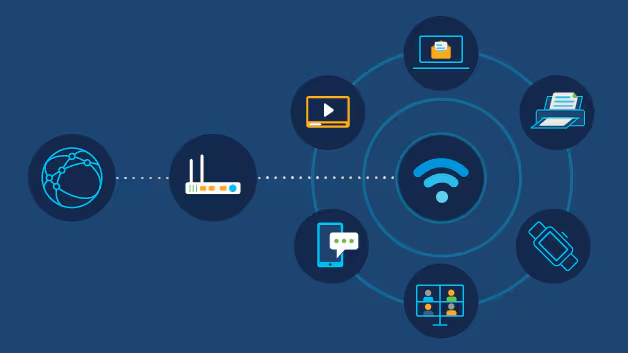
The internet is a massive global network that connects millions of devices, allowing people to share information, communicate, and access digital services. It operates through interconnected servers, data centers, satellites, fiber-optic cables, and wireless technologies. This system forms the backbone of modern communication, powering everything from email to streaming platforms and cloud computing.
How WiFi Fits Into the Internet
WiFi is a wireless networking technology that enables devices to connect to the internet without physical cables. It uses radio waves to transmit data between a router and connected devices, such as smartphones, laptops, smart TVs, and home appliances. While the internet provides global connectivity, WiFi delivers local access within homes, offices, and public spaces.
How Internet Connectivity Works
Data Transmission
Information travels across the internet in small data packets. These packets move through various routes until they reach the intended destination, then reassemble to form webpages, videos, or messages.
Internet Service Providers (ISPs)
ISPs supply internet access to customers through different technologies such as:
- Fiber-optic connections for ultra-fast speeds
- DSL or cable for residential use
- Satellite internet for remote regions
- Mobile networks (4G/5G) for on-the-go access
How WiFi Networks Operate
Router Functionality
A WiFi router receives internet signals from an ISP modem and broadcasts them wirelessly. It assigns IP addresses, manages connected devices, and ensures secure data transfer.
WiFi Frequency Bands
WiFi uses two primary frequency bands:
- 2.4 GHz: Wider range but slower speeds
- 5 GHz: Faster speeds but shorter range
Some modern routers support dual-band or tri-band technology for improved performance.
Benefits of Internet and WiFi
Instant Communication
Email, messaging apps, and video conferencing have made global communication seamless.
Access to Information
Search engines, online courses, and digital libraries offer endless learning opportunities.
Smart Home Integration
WiFi enables smart devices like thermostats, doorbells, and lights to function efficiently.
Remote Work and Learning
High-speed internet supports video meetings, cloud storage, digital classrooms, and collaboration tools.
Entertainment on Demand
Streaming platforms, online gaming, and social media rely heavily on strong internet connections.
Common Challenges and Solutions
Slow Connection Speeds
Caused by router limitations, interference, outdated hardware, or ISP congestion. Upgrading equipment or relocating the router often helps.
WiFi Dead Zones
Large homes or thick walls may create areas with weak signals. Mesh WiFi systems or range extenders can resolve this issue.
Security Risks
Unsecured networks are vulnerable to hacking. Enabling encryption, using strong passwords, and updating firmware enhances protection.
Device Overload
Too many connected devices may reduce performance. Routers with advanced bandwidth management offer better stability.
Ways to Improve WiFi Performance
Optimal Router Placement
Placing the router in a central, elevated position improves coverage.
Regular Firmware Updates
Updates enhance security, fix bugs, and improve network efficiency.
Use of Modern Standards
Routers supporting WiFi 5 (802.11ac) or WiFi 6 (802.11ax) deliver faster, more stable connections.
Reducing Interference
Keeping the router away from microwaves, cordless phones, and thick metal surfaces can strengthen signal quality.
Future of Internet and WiFi
Advancements like WiFi 7, 5G integration, and edge computing promise higher speeds, lower latency, and more reliable connectivity. Smart cities, autonomous vehicles, and advanced IoT ecosystems depend on these evolving technologies to operate efficiently.
Conclusion
The internet and WiFi serve as critical pillars of modern life. Understanding how they function enables users to make informed decisions about their connectivity needs. With continuous technological advancements, the online world will become even more integrated into daily activities, further transforming communication, entertainment, and work.
FAQs
1. What is the main difference between internet and WiFi?
The internet is a global network, while WiFi is a wireless method of connecting devices to that network.
2. Does a faster router increase my internet speed?
A better router improves WiFi performance, but your maximum speed still depends on your ISP plan.
3. Why does my WiFi slow down at night?
Network congestion occurs when many users in the same area access the internet simultaneously.
4. How many devices can connect to a WiFi network?
It depends on the router’s capacity; modern routers can handle dozens of devices efficiently.
5. Is public WiFi safe to use?
Public WiFi is less secure, but using a VPN and avoiding sensitive transactions helps minimize risks.
6. Can WiFi work without an internet connection?
Yes, devices can communicate within the same WiFi network, but they won’t access the internet.
7. How often should I replace my router?
Typically every 3–5 years, or sooner if performance drops or newer technologies become available.


